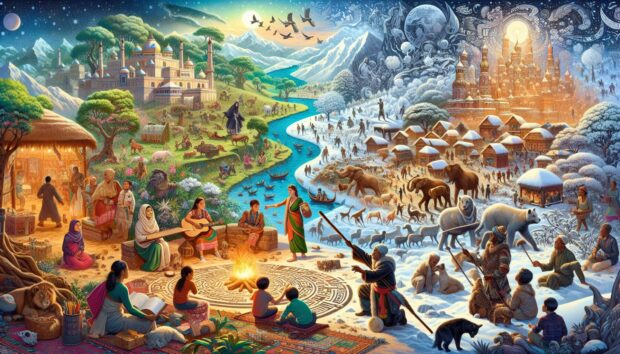
Embarking on a journey through the fables and legends of the world is akin to peeling back the layers of time itself. The ancient stories that have been whispered through the generations carry with them fragments of bygone eras, offering a gaze into the collective psyche of our ancestors.
Enchanting Tales from Distant Shores
The rich tapestry of folklore is woven with countless threads, each unique to the culture it represents. In the Nordic chills, for instance, the sagas speak of Odin and Thor, gods who danced amongst mortals and ruled over the mystical realm of Asgard. Norse mythology is both grand and complex, its characters embodying the forces of nature and human emotion.
Venture across the world to the sun-kissed lands of Greece where the pantheon of gods led by Zeus held sway over every aspect of life. Greek myths have deeply influenced Western culture, serving as allegories for psychological exploration and artistic inspiration.
Not to be outshone, the intricate legends of the East tell a different tale. Japanese folklore is replete with stories of Yōkai—shapeshifting spirits that range from mischievous to malevolent. The Kitsune, a cunning fox spirit, and the Kappa, a water demon, stand out as iconic examples of folklore that seamlessly blends animism with the human condition.
The Allure of the Mysterious and Macabre
Folklore is often grounded in the desire to understand the unexplainable and to offer cautionary tales. The Slavic Baba Yaga, a fearsome witch who dwells in a hut that stands on chicken legs, serves as a reminder of the perils that lurk within the unknown. Meanwhile, the Latin American legend of La Llorona recounts the haunting wails of a ghostly mother lamenting the loss of her children—a chilling commentary on love, loss, and the consequences of our actions.
Preserving the Wisdom of Old
The act of passing down folklore is not merely about preserving old stories; it’s about safeguarding a reservoir of ancestral wisdom. These narratives are more than entertainment; they encapsulate morals, ethical guidelines, and societal norms of their time.
In a world ever more dominated by concrete and circuits, keeping the embers of folklore alive is a testament to the enduring nature of oral traditions and storytelling. It reflects our continued fascination with the past and a communal yearning to find meaning in the stories that have stood the test of time.
As we delve into folklore, we become time-travelers, exploring the rich heritage left to us by our forebears. We might find that within these tales are reflections of our deepest fears, greatest joys, and an endless well of imagination that continues to inspire and shape the future.