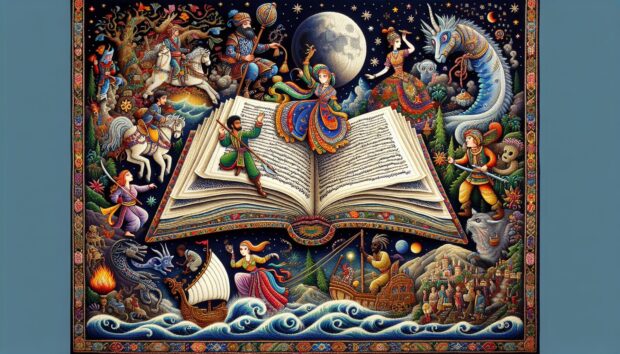
Folklore, the age-old tradition of storytelling, boasts an intriguing tapestry of tales, transporting us to different worlds and timeframes through myth, legend, and superstition. This article will explore various aspects of folklore and their everlasting relevance in our modern setting.
Understanding Folklore
Folklore is a cultural manifestation passed down through generations, either by word of mouth or custom. It is a broad term encompassing tales, music, dances, myths, legends, oral history, proverbs, jokes, popular beliefs, customs, and more. They often encompass the human imagination’s brilliance, showcasing virtues and vices, heroism and trickery, love and hatred, unity and social disputes – all held together by the gossamer threads of incredible narratives.
The Purpose and Importance of Folklore
Folklore forms an integral part of every culture, serving as a mirror to societal norms and values. Beyond mere entertainment, folklore is used to teach societal norms, moral values, and understanding of natural and social phenomena. Folktales often contain heroes or characters whom children can look up to, serving as moral compasses and guides to acceptable behavior.
The Magic of Myth and Legend
Myths and legends are an integral part of folklore. These are embellished, imaginative stories that have been passed down through generations, often explaining natural phenomena, creation, and the cosmos.
Greek mythology, for instance, is an extensive collection of stories about gods, heroes, and creatures, profoundly impacting modern culture and our understanding of human nature. Similarly, Norse mythology with its tales of Thor and Loki, and Celtic myths featuring stories of King Arthur and the Knights of the Round Table are essential parts of global cultural heritage.
Superstitions – Another Facet of Folklore
Superstitions are widely held beliefs based on traditional notions, often related to luck, magic, or spiritual beings. Examples of common superstitions include a black cat crossing your path signifying bad luck or the belief that breaking a mirror leads to seven years of misfortune.
Although scientifically unverified, these beliefs often hold sway today, revealing the deep-seated influence of folklore in society’s psyche.
Folklore in Modern Times
Although many folklore elements may seem antiquated today, they remain an integral part of our cultural fabric. Folktales inspire many contemporary arts, literature, and movies. Folklore elements frequently serve as metaphors in political and social discourses, emphasizing their timeless appeal.
Conclusion
Far from being outdated or irrelevant, folklore offers a fascinating lens to explore cultural history, human psychology and societal norms. Whether it’s the ancient myths, yarns of legendary heroes, or quirky superstitions, the intriguing world of folklore continues to enthral, educate and shape societal perspectives across generations.