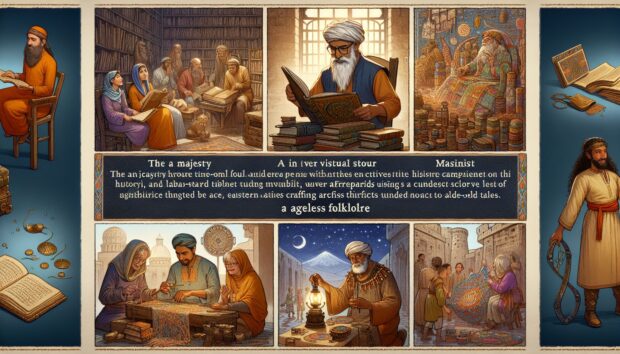
Folklore, the term coined by a British anthropologist, William Thoms, in 1846, is the embodiment of stories passed down through generations, reflecting cultural traditions, beliefs, and historical accounts. These narratives, often steeped in the supernatural but tethered to human experience, provide a wealth of shared understanding about the human condition. Let’s delve into this intriguing world of folklore.
The Universality of Folklore
Folklore transcends geographical divisions, becoming a shared treasure of collective wisdom expressed through different mediums – be it legends, moral tales, customs, festivals, song, dance, or artwork. These forms of folklore create a connection between individuals and their heritage, offering insights into their ancestors’ lives and wisdom. Humans’ innate desire to seek answers to the mystery of existence has given rise to myriad folklore tales, offering lessons and providing solace. From the Native American stories about nature’s origin, Japanese folklore about spirits (Yokai), to Indian mythology’s divine tales, folklore is truly universal.
Folklore as a Cultural Bridge
Each piece of folklore is a fragment of the cultural mosaic of the society it originates from. Through the power of narration, folklore offers an intimate look into different cultures, fostering a sense of admiration and respect for diversity. The adventures of Anansi the spider in West African stories, or the battles of Thor in Norse mythology, can transport us to a different time and place, helping us appreciate cultural nuances.
Lessons from Folklore
Folklore narratives are as educational as they are entertaining. They often distill complex life-lessons into captivating stories, making the moral easier to digest and remember. The stories of Aesop’s fables, the Panchatantra, or Grimm’s fairy tales teach values of kindness, courage, wisdom, and resilience. By building empathy and emphasizing universal morality, folklore has an essential educative function.
Modern Folklore
In the contemporary world, folklore continues to exist and thrive. New forms of folklore, birthed by the digital age, blend traditional elements with modern contexts. From urban legends propagated on the internet to characters from pop culture, these stories reflect contemporary values and fears, thus continuing the tradition of folklore.
In conclusion, folklore is the fabric of our shared human experience, woven across generations and cultures. It reminds us of not only our diverse heritage but also our shared values and experiences. By honoring the ancient practice of storytelling, we keep the spirit of our ancestors alive, enrich our cultural understanding, and continue to learn life’s valuable lessons.